
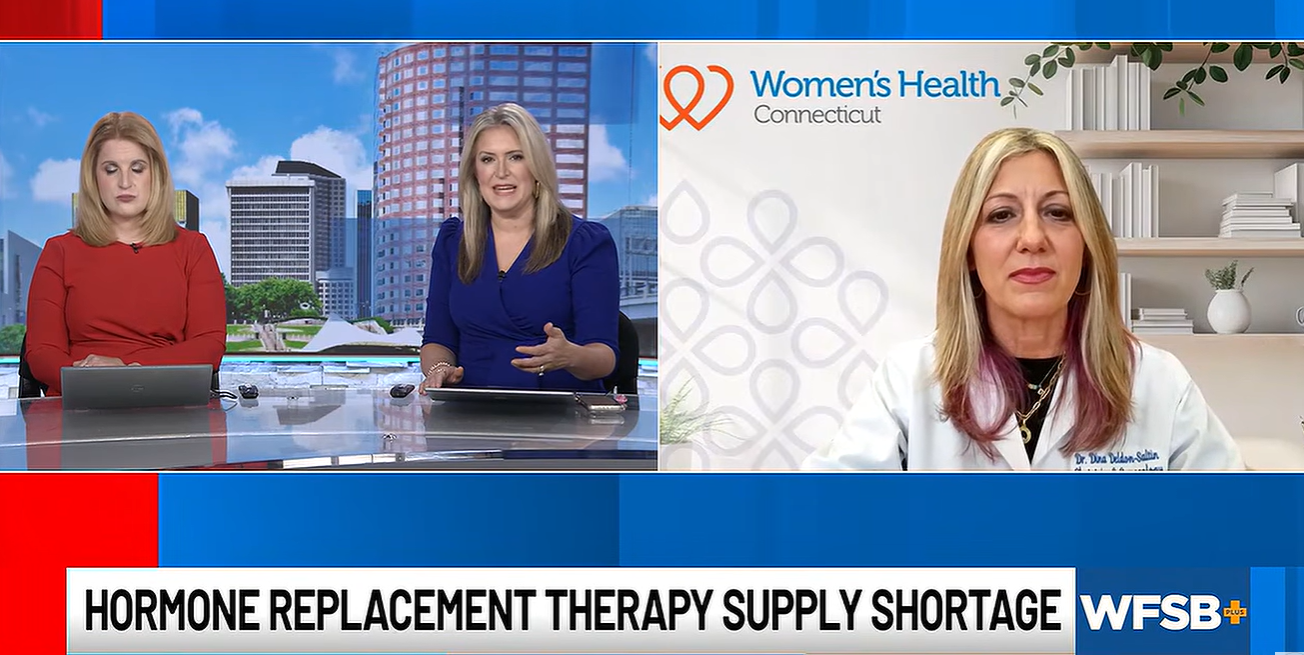
The Estrogen Patch Shortage: Why it’s Happening & Navigating Your Options
Is there an estradiol shortage? The answer is yes. All over the country, many women are finding it challenging to fill their estrogen patch prescription. A nationwide shortage is disrupting hormone replacement therapy (HRT) for menopausal patients, leaving many searching multiple pharmacies or facing gaps in the treatment they rely on for symptom relief.
At Women’s Health Connecticut, our providers help patients navigate these supply disruptions every day with thoughtful care plans and expert guidance. “When access to a preferred treatment is disrupted, our priority is helping patients stay on track with safe, effective options guided by their women’s health provider,” shares WHCT’s CEO Paula Greenberg.
Here’s what’s driving the shortage, what it means for your care, and the safe alternatives available so you don’t have to go without relief.
Key Takeaways
- There’s a nationwide estrogen (estradiol) patch shortage disrupting hormone replacement therapy for menopausal patients.
- Demand has spiked sharply. WHCT logged 20,000+ menopausal-aged patients with HRT orders in 2026 — a 60% jump over 2025.
- Supply isn’t keeping up. According to our data, WHCT’s 30-day fill rate fell from ~50% to below 8%; only about 1 in 10 patients can fill their prescription within a month.
- The main driver is better awareness of HRT safety. The FDA’s late-2025 reversal on the HRT box warning triggered a wave of new prescriptions, while patch products sit on backorder with no clear restock timeline.
- Most affected patients aren’t switching safely — fewer than 15% moved to an alternative estradiol formulation, meaning many are going without therapy.
- Effective alternatives exist: different patch strengths/brands, gels, sprays, vaginal rings, or oral medications — chosen with a clinician based on symptoms, history, availability, and insurance.
- Our top advice is don’t stop or change therapy on your own; start refills early, ask pharmacies to check stock, and make a backup plan with your provider.
Why is There an Estrogen Patch Shortage?
Over the years, as more women are educated on menopause symptoms and treatments, estrogen hormone replacement therapy (HRT) has become more favorable. According to data, estrogen replacement therapy use nearly doubled between 2017 and 2026, wth that number tripling in women ages 45-54.
Additionally, demand for hormone replacement therapy has climbed sharply this year, driven in part by the FDA’s late-2025 decision to remove the boxed warnings from HRT products, which sparked renewed interest and a wave of new prescriptions. While we’re glad the FDA reversed course on this critical menopause treatment, supply hasn’t kept pace, and pharmacies are reporting longer, more frequent wait times. “
Across the country, patients are reporting difficulty filling prescriptions for estradiol patches — a transdermal (through-the-skin) form of estrogen commonly used to manage menopause symptoms like hot flashes, night sweats and sleep disruption.
Our own patient data clearly shows the far-reaching impact of the shortage:
- More than 20,000 menopausal-aged patients had documented HRT orders in 2026 — a 60% increase over 2025.
- Only about 1 in 10 WHC patients can fill their prescription within a month of receiving it from their doctor.
- Our 30-day prescription fill rate has fallen from roughly 50% to below 8% in recent months.
To put it plainly, the need outweighs the supply — and the people caught in the middle are patients who depend on consistent symptom management.
What The Estrogen Patch Shortage Means For You as a Patient
For patients who were already stable on the estrogen patch, an interruption in treatment may mean a return of symptoms, such as hot flashes, night sweats, disrupted sleep and mood changes, along with unnecessary stress.
More concerning for WHC providers is that most patients haven’t smoothly transitioned to another option. Among those who were actively filling patch prescriptions before the shortage began, fewer than 15% have moved to an alternative estradiol formulation — meaning many are going without estrogen therapy altogether.
That’s the exact outcome we want to prevent. A prolonged interruption in treatment can have disastrous effects on your quality of life, and making arbitrary changes without proper oversight can also cause issues. The most important message: don’t stop or change your therapy on your own. If your prescription can’t be filled, contact your provider so you can make a plan together.
Alternatives to The Estrogen Patch
While the patch is a convenient and preferred option for many patients, it isn’t the only effective way to deliver hormone therapy— “when access to a preferred treatment is disrupted, our priority is helping patients stay on track with safe, effective options guided by their women’s health provider,” counsels WHCT provider Dr. Dina Deldon-Saltin, DO, MSCP.
When clinically appropriate, WHCT providers work with patients to identify alternatives, which may include:
- A different patch strength or alternate manufacturer
- Topicals like estrogen gels or sprays
- Vaginal ring
- Oral medications
Our top priority is maintaining the most effective treatment protocol for each patient. As such, the right HRT alternative depends on your health history, your symptoms, what’s in stock at your pharmacy, and your insurance coverage—which is why we always advise patients to make this decision with their provider, and not alone.
Are Natural Estrogen Replacements as Effective?
As awareness around perimenopause and menopause has grown in recent years, a number of alternatives claiming to be as effective as clinical HRT have popped up. While there’s usually no harm in taking a supplement (once you speak with your doctor), they are simply not a viable alternative to HRT. HRT has been shown to reduce hot flashes, vaginal dryness (which can result in painful sex), bone density loss, and some of the mental and emotional effects of menopause.
There isn’t enough evidence that over-the-counter HRT medications or vitamins are anything more than clever marketing.
Steps to Take to Minimize the Impact of the Estrogen Shortage
The most important thing is to keep clear, open communication with your WHCT provider so we can help you avoid any interruptions in medication. While finding alternatives will work for some, for others it’s not as simple, so if you strongly prefer to stay on the estradiol patch and are having trouble finding it, Dr. Deldon-Saltin offers this guidance:
- Start the search early: If you know you want to stay on the patch, don’t wait until you’re nearly out. Contact your pharmacy well before your refill is due so there’s time to check availability.
- Ask pharmacies to check stock before transferring: Call nearby pharmacies — including different pharmacy chains when possible — to ask whether your specific patch strength or an equivalent product is available before you move your prescription.
- Talk with your clinician about patch options: If your usual patch is unavailable, ask whether a different patch strength, dosing schedule, manufacturer, or brand-name/generic option may be right for you. Your women’s health clinician can walk you through the benefits and potential side effects of each.
- Have a backup plan: If all else fails and you cannot find your patch in time, don’t stop or change therapy on your own. Your WHCT provider can discuss temporary or longer-term alternatives, including gels, sprays, vaginal rings or oral medications.
“Gels, sprays and other therapies can provide meaningful symptom relief when selected with the guidance of a clinician,” Dr. Deldon-Saltin emphasizes. “For many patients, comparable alternatives may be available,” she continues.
Estrogen Shortage FAQ
How long will the estrogen patch shortage last?
We don’t know yet. Many patch products remain on back order with no guaranteed restocking timeline, and industry experts suggest demand could stay elevated for the foreseeable future. The best protection is staying in close contact with your pharmacy and provider.
Is it safe to switch from the patch to a gel, spray or pill?
For many patients, comparable alternatives are available and effective. The right choice depends on your medical history, symptoms and other factors — so always consult your WHCT before making any decisions about alternative therapies.
What happens if I just stop taking HRT until the patch is back?
We strongly urge patients not to stop abruptly, as your menopause symptoms may return. If you can’t fill your prescription, contact your provider before making any changes so you can plan a safe transition.
Why did demand for HRT increase so much?
Education around menopause and interest in hormone therapy have grown in recent years, and the FDA’s late-2025 removal of boxed warnings on HRT products prompted a wave of new prescriptions and renewed interest in transdermal patches.
How long does it take to see changes on HRT?
Symptom relief like better sleep can show up within a few weeks. Any body-composition shifts are gradual and vary from person to person — and they depend heavily on your diet and activity.
Why is there an estrogen patch shortage?
After the FDA removed the boxed warnings from HRT products in late 2025, prescriptions surged — at Women’s Health Connecticut, HRT orders rose 60% over the prior year. Manufacturers haven’t scaled up production to match, so wait times are longer. If the shortage impacts you, research nearby pharmacies for availability, speak with your provider, and have an alternative plan in place.
Don’t navigate the shortage alone
Supply disruptions are frustrating, but you don’t have to manage them alone—or go without relief. Women’s Health Connecticut providers are helping patients navigate the HRT patch shortage in real time, finding safe, effective options tailored to each patient.
If you’re having trouble filling your patch prescription or need to find viable alternatives, make an appointment with your Women’s Health Connecticut provider to discuss your menopause treatment options.